
I’ve spoken to a few new MFL club owners recently and noticed some of the same issues coming up again and again – and it’s the same mistakes I made when I got started too.
So you don’t have to learn the hard way, here’s my list of the biggest beginner slip-ups, so you can skip the frustration and focus on enjoying the game.
1. Starting in the wrong division for your budget
If you’re going down the club owner route, your first big call is which division to start in – and it’s where a lot of new users go wrong.
Buying a licence directly from MFL gives you a clean, history-free club… but you’ll start in Flint, the bottom tier. Buying from the Marketplace lets you choose an established club in a higher division.
Promotions are tough and lower-tier rewards are poor, so start as high as your budget allows – factoring in both the cost of the club and the players you’ll need to compete. If you’ve got a squad ready for Ice, buy an Ice club. You’ll earn better rewards and your players will progress faster, as they won’t be penalised for playing against less talented opposition (and if that’s news to you, the whitepaper is your friend).

Unsure which division is right for you? The MFL Manager site shows the averages across each tier: https://mflmanager.fr/division
2. Judging players only by their overall rating
That big overall number might catch your eye, but it never tells the full story. Two players can share the same rating yet perform completely differently on the pitch.
Before agreeing a loan or buying a player, always dig into the full attribute spread – pace, shooting, passing, dribbling, defending, physical – and think about how they fit your style. A back line of slow tanks might look solid on paper but will get roasted by fast attackers. Likewise, if you’ve already got rapid wingers with great delivery, a slower but clinical striker could be the perfect finisher.
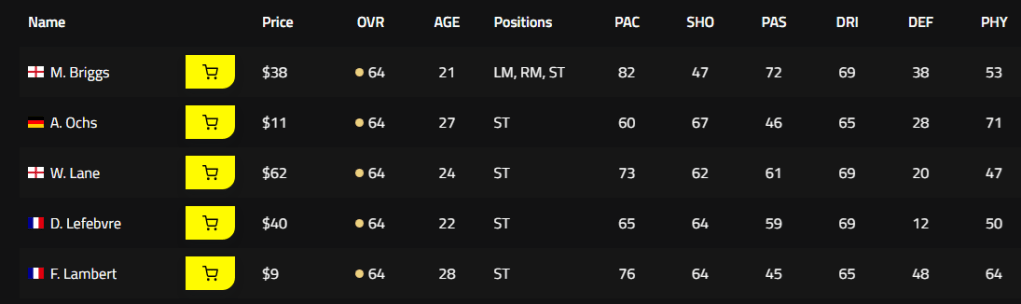
Goalkeepers only have one rating, but check their height too. It’s only a minor factor right now, but I’ll always trust a 6’2″ brick wall over a 5’5″ shot-stopper.
Finally, look at secondary positions. In MFL, versatility is gold. A player who can slot into multiple roles is often more valuable than a higher overall specialist. Remember, you can check for secondary positions on https://mflplayer.info/.
3. Getting caught out by player contracts
It’s the rookie nightmare – you land the perfect player at the perfect price… only to discover he’s locked into another club and you can’t use him.
In MFL, transfer windows open between seasons and during the mid-season break. Players also have club contracts. When you buy a player, you become their agent, but you can only add them to your squad during a window and only if they’re a free agent (no existing club contract).
You can still buy contracted players, but they’ll remain in the other club until their contract ends – which could be weeks away. The only way around it is negotiating a contract cancellation with the other club owner, and that’s rarely easy. The lesson: always check contract status before you buy.
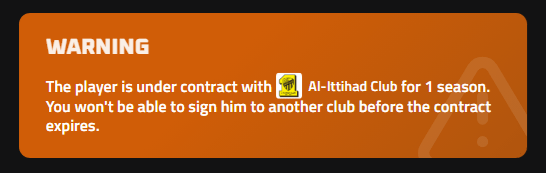
That said, it’s not always a bad move to buy players before you can use them. I often snap up contracted players outside the windows because:
a) prices are usually lower than for free agents, and
b) you’ll collect the $MFL they earn on their existing contract.
4. Not using the tactics presets OR SETTING custom tactics for games
MFL gives you multiple saved tactics slots for a reason but it’s one of those things that people don’t always cotton on to straight away. Likewise the ability to set custom tactics for upcoming games.
Save your best setups so you can switch in seconds and use the custom tactics to plan ahead for specific opponents. It makes pre-match prep painless, and there’s a hidden bonus: if you only ever rely on your default tactic, you’re effectively giving opponents a free scouting report. Friendlies always load your default setup, so anyone arranging one against you can see exactly how you play.
As for the ‘tactics meta’? If I knew that, I’d be top of every league! The match engine gets a slight tweak each season, so there’s unlikely to be a single winning formula. General wisdom says: keep it simple. Start with team instructions, avoid over-tweaking every individual player, and use friendlies to test changes before you roll them out in competitive matches.
5. Building the wrong size squad
There’s no single ‘correct’ squad size in MFL but there is a right way to size your squad based on what you want to achieve.
Bigger squads are ideal if you’re pushing hard in both league and cup, but player progression will be slower. Smaller squads progress faster, but you’ll need smart rotation to avoid burnout. Versatile players who can cover multiple positions make a tighter squad more viable, while single-position specialists push you towards carrying more depth.
For most managers, 18–21 players is the sweet spot. If progression is your top priority and you trust yourself to rotate effectively, stick to 18 (or even less). If you prefer a more relaxed approach with extra rest and formation flexibility, perhaps aim for 20 or 21. Decide your focus first, then build the squad to match.
6. Playing on hard mode
There’s no official ‘hard mode’ in MFL – but starting without doing your homework is the closest thing to it.
The whitepaper isn’t nearly as dry as it sounds, and if you really can’t face reading it, at least check out a community guide (like mine here). You’ll pick up the basics on progression, promotion, relegation, and more – the kind of knowledge that really helps when you’re getting started.
Then there are the tools. From pricing engines to tactic analysers and league prediction models, MFL’s community-built resources remove a lot of the guesswork in this game. If you’re not using them, you’re essentially playing with one arm tied behind your back. Some worth checking out:
- MFL Player Info – put in a player’s ID to find out their best positions and rough value
- MFL Assistant – lots of game info to dig into here and you can sign up for email alerts too (the daily progression report is a must!)
- MFL Coach – the sister site of MFL Assistant, with more detailed tactical and formation analysis
- MFL Manager – a French site with tons of useful info about clubs and divisions, including projected finishes each season
- MetaFixerLab – a retro-themed site that tell you how much MFL you’re on track to win each season
- MFL Leaks – a Chrome extension which improves your experience on the MFL site
- MFL Stats – loads of useful information about your agency and the wider world of MFL
I think that’ll do for now.
Avoiding these rookie mistakes won’t guarantee your club silverware, but it should at least give you a solid foundation to build on. I’ve probably missed some important ‘wish I knew that sooner’ tips – if I have, share them in the comments or hit me up on socials.
And if you’ve not joined MFL yet, don’t make the mistake of joining without using a referral code. It helps the referrer and it helps you too because it means you get gifted a free Common player after you buy your first pack (minimum spend $25). You can find plenty posted online or feel free to use mine: https://app.playmfl.com/?referrer=3D7036
 MDJ
MDJ 